Abstract: After a strong performance in the first half of the year, the euro is now at a critical juncture. The EU’s suspension of retaliatory tariffs against the U.S., while easing trade war risks, has not dispelled market doubts about the euro’s trajectory. The currency’s decline since July stems from policy divergence between the U.S. and Eurozone central banks and ongoing trade maneuvering. Its future path will depend on the ECB’s policy resolve and the actual impact of U.S. tariffs.
After a strong first half of the year, the euro is standing at a critical crossroads.
The European Union’s latest decision to suspend retaliatory tariffs against the U.S. has temporarily eased the risk of an escalating trade war, but market uncertainty regarding the euro’s long-term direction has not dissipated.
A European Commission spokesperson stated on August 4 that retaliatory tariffs against the U.S., originally scheduled to take effect on August 7, would be suspended for six months. The move is intended to support the implementation of the trade agreement previously reached by European Commission President Ursula von der Leyen and U.S. President Donald Trump, which the EU said brings “stability and predictability” to the market.
Ultima Markets believes that while the tariff truce temporarily averts a worst-case scenario, the long-term impact of the agreement on Europe’s economy, coupled with internal political divisions, casts a shadow over the euro’s future path.
Policy Divergence: Central Bank Paths Dictate Exchange Rates
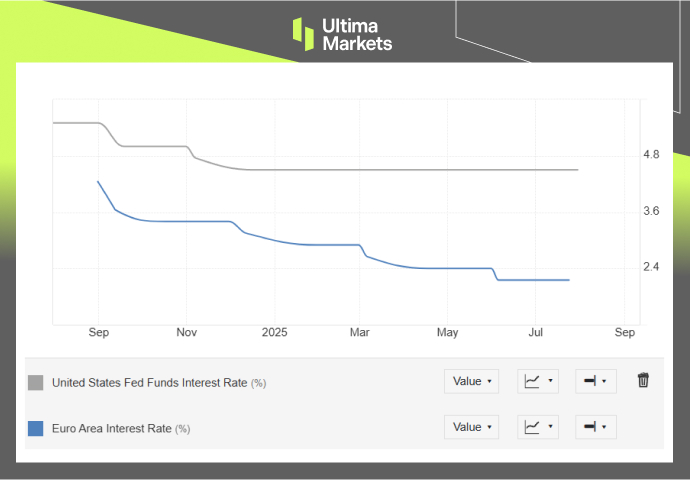
The core driver of the euro’s decline since July is the widening policy divergence between the European Central Bank (ECB) and the Federal Reserve.
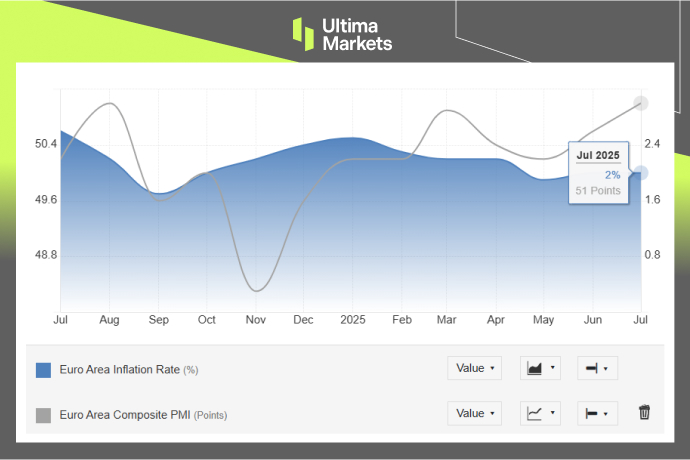
On July 24, the ECB announced it would hold interest rates steady, marking the first pause in its rate-cutting cycle since last June. The decision came as Eurozone inflation hit its 2% medium-term target and the July Composite PMI rose to 51, indicating economic resilience.
Despite the positive data, ECB President Christine Lagarde struck a notably cautious tone, emphasizing the “exceptionally uncertain external environment” and specifically highlighting that U.S. tariff policy could have a two-way impact on inflation.
Market expectations for rate cuts were subsequently adjusted. Although the market sees a lower probability of an ECB rate cut within the year, money markets are still pricing in a greater than 70% chance of a cut in December.
By contrast, while the Federal Reserve also paused its rate cuts in July, the market widely anticipated one more cut in the fourth quarter and has factored in a long-term upward shift in the Fed’s neutral rate to the 3%-4% range. The interest rate differential between the U.S. and Europe provides short-term support for the attractiveness of U.S. dollar assets.
Trade Maneuvering: Tariff Agreement Coexists with Uncertainty
The back-and-forth in U.S.-EU tariff negotiations has become a direct catalyst for euro volatility.
On July 27, the two sides reached an agreement for the U.S. to impose a 15% tariff on EU goods such as automobiles and semiconductors.
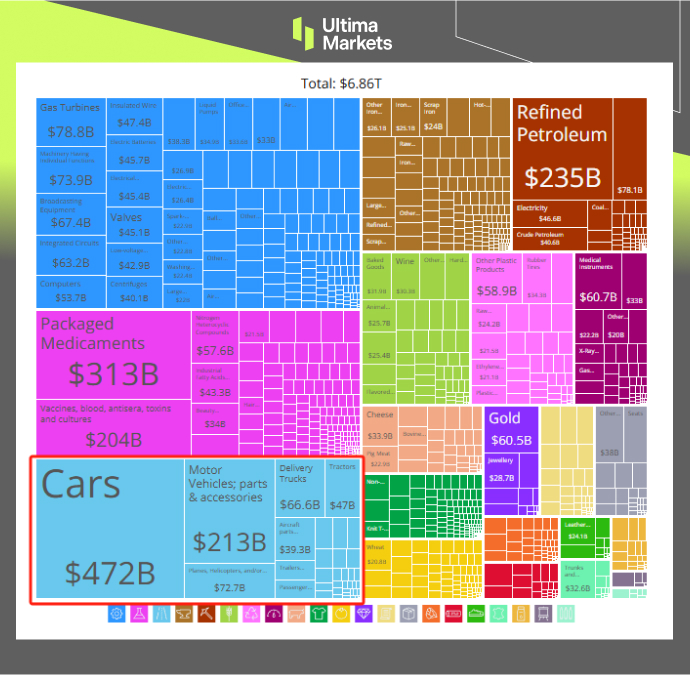
Although this rate is lower than the previously threatened 30%-50%, it still represents significant pressure on the highly export-dependent Eurozone economy. According to 2023 data, the auto industry accounted for 15% of EU exports, and a 15% tariff is projected to compress profits for related companies by 3%-5%.
(Image: The EU auto industry’s exports reached €1.03 trillion, accounting for 15% of total GDP in 2023)
The deeper impact is that trade policy uncertainty has put the ECB in a dilemma.
According to assessments, full implementation of the tariffs could lower inflation by 0.3-0.5 percentage points by suppressing demand. However, if supply chain disruptions push up costs, it could have the opposite effect of raising inflation. This conflict leaves the euro oscillating between depreciation pressure and a wait-and-see policy stance.
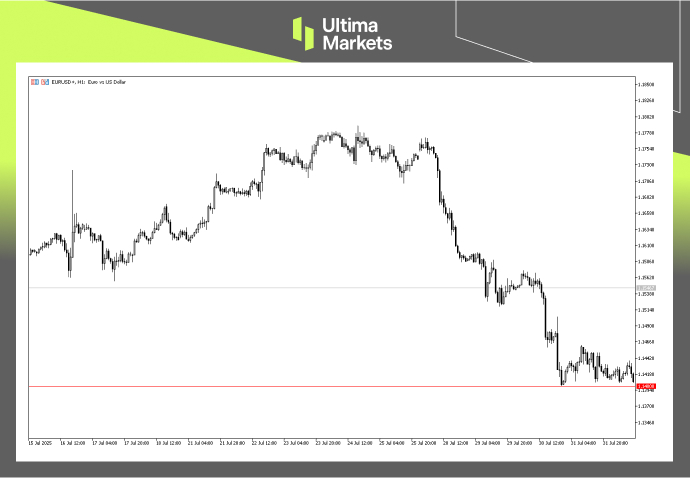
The foreign exchange market’s reaction was even more telling. After the ECB’s July decision, the euro fell only slightly. But in the three trading days following confirmation of the U.S.-EU tariff agreement, EUR/USD tumbled more than 3%, at one point breaking below the key 1.140 support level.
(Image: EUR/USD Exchange Rate Chart, Source: Ultima Markets MT5)
Post-NFP, Euro’s Turning Point Still Requires Patience
In summary, Elon Gu, a senior analyst at Ultima Markets, believes the euro’s future trajectory depends on the evolution of two core variables: the ECB’s policy resolve and the actual impact of U.S. tariffs.
First is the ECB’s policy resolve.
Following the July Non-Farm Payrolls report, expectations for a Fed rate cut this year surged, with a September cut now seen as a near certainty; the market’s focus has even shifted to whether it will be a 25 or 50 basis point reduction.
In contrast, with the EU economy maintaining resilience, the ECB has limited room to cut, meaning the downward pressure on the U.S. dollar is far greater than on the euro.
However, the EU’s economic resilience is predicated on the actual impact of U.S. tariffs being manageable.
The six-month suspension of retaliatory tariffs by the EU means no further countermeasures will be taken this year. While the general framework of a 15% tax in the U.S.-EU trade agreement is set, specific details are still under negotiation, and the market remains optimistic.
However, if the details significantly drag on Eurozone GDP, it could compel the ECB to restart its easing measures. In that scenario, EUR/USD could revisit the 1.120 level.
Disclaimer
The comments, news, research, analysis, prices, and other information contained herein are provided as general market information only, to assist readers in understanding market conditions, and do not constitute investment advice. Ultima Markets has taken reasonable measures to ensure the accuracy of this material, but cannot guarantee its precision, and it may be changed at any time without notice. Ultima Markets will not accept liability for any loss or damage, including without limitation, any loss of profit, which may arise directly or indirectly from use of or reliance on such information.