This website is managed by Ultima Markets’ international entities, and it’s important to emphasise that they are not subject to regulation by the FCA in the UK. Therefore, you must understand that you will not have the FCA’s protection when investing through this website – for example:
You will not be guaranteed Negative Balance Protection
You will not be protected by FCA’s leverage restrictions
You will not have the right to settle disputes via the Financial Ombudsman Service (FOS)
You will not be protected by Financial Services Compensation Scheme (FSCS)
Any monies deposited will not be afforded the protection required under the FCA Client Assets Sourcebook. The level of protection for your funds will be determined by the regulations of the relevant local regulator.
Note: UK clients are kindly invited to visit https://www.ultima-markets.co.uk/. Ultima Markets UK expects to begin onboarding UK clients in accordance with FCA regulatory requirements in 2026.
If you would like to proceed and visit this website, you acknowledge and confirm the following:
1.The website is owned by Ultima Markets’ international entities and not by Ultima Markets UK Ltd, which is regulated by the FCA.
2.Ultima Markets Limited, or any of the Ultima Markets international entities, are neither based in the UK nor licensed by the FCA.
3.You are accessing the website at your own initiative and have not been solicited by Ultima Markets Limited in any way.
4.Investing through this website does not grant you the protections provided by the FCA.
5.Should you choose to invest through this website or with any of the international Ultima Markets entities, you will be subject to the rules and regulations of the relevant international regulatory authorities, not the FCA.
Ultima Markets wants to make it clear that we are duly licensed and authorised to offer the services and financial derivative products listed on our website. Individuals accessing this website and registering a trading account do so entirely of their own volition and without prior solicitation.
By confirming your decision to proceed with entering the website, you hereby affirm that this decision was solely initiated by you, and no solicitation has been made by any Ultima Markets entity.
Ultima Markets does not have an establishment in Singapore and does not operate from Singapore.
Ultima Markets does not provide products or services to citizens or residents of Singapore, and account applications from Singapore citizens or residents will not be accepted.
If you are a citizen or resident of Singapore, please do not open an account or use Ultima Markets’ products or services.
By selecting “Acknowledge and Continue Browsing”, you confirm that you are accessing this website on your own initiative and that your access is not the result of any direct marketing, targeted advertising, solicitation, or promotional activity by Ultima Markets.
Nothing on this website constitutes an offer, solicitation, or promotion of products or services in any jurisdiction where such activity is prohibited. You are responsible for ensuring that your access to and use of this website complies with applicable local laws and regulations.
What is the currency in Egypt? Learn how the Egyptian pound EGP works, its exchange rate drivers, and what traders should know today.
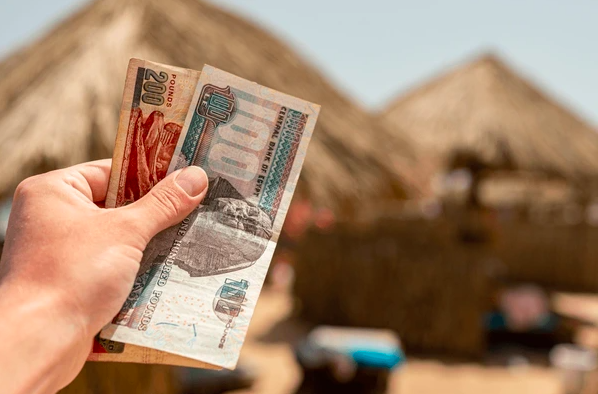
The currency in Egypt is the Egyptian Pound, officially abbreviated as EGP and commonly written as £E. It is the only legal tender issued and regulated by the Central Bank of Egypt, and it plays a central role in Egypt’s domestic economy, trade, tourism, and foreign exchange markets.
If you are researching what is the currency in Egypt, planning to investing in emerging markets, or trading forex, understanding how the Egyptian pound works today is essential, especially given recent monetary reforms and currency adjustments.
Overview of Egypt’s Currency
Currency name: Egyptian Pound
ISO code: EGP
Symbol: £E or E£
Subunit: Piastre (1 pound = 100 piastres)
Issuing authority: Central Bank of Egypt
The Egyptian pound is used nationwide for all goods, services, salaries, taxes, and government transactions. Foreign currencies such as USD or EUR are not legally accepted for everyday payments, although exchange offices and banks are widely available.
Egyptian Pound Denominations
Banknotes in Circulation
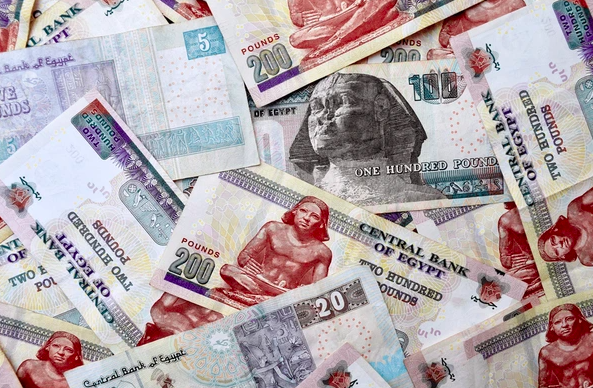
Egyptian pound banknotes are printed in Arabic on the front and English on the back. Common denominations include:
1 pound
5 pounds
10 pounds
20 pounds
50 pounds
100 pounds
200 pounds
In recent years, Egypt has also introduced polymer banknotes for lower denominations to improve durability and reduce counterfeiting.
Coins and Piastres
Coins are used mainly for smaller transactions and include:
25 piastres
50 piastres
1 pound coin
Piastre coins are increasingly rare in daily use due to inflation but remain legal tender.
Egyptian Pound Exchange Rate
When asking what is the currency in Egypt, many users also want to understand how strong the Egyptian pound is compared to other currencies.
The EGP operates under a managed float system, meaning its value is influenced by market forces while the central bank intervenes when necessary. Since 2022, Egypt has implemented multiple currency adjustments as part of broader economic reforms.
Key Drivers of the EGP Exchange Rate
The Egyptian pound is classified as a high-volatility emerging market currency because its value is influenced by both domestic structural factors and global capital flows. Unlike major currencies, EGP reacts sharply to policy shifts, funding conditions, and external shocks.
Inflation and Interest Rate Policy
Inflation is the single most important internal driver of the Egyptian pound. Egypt has experienced elevated inflation due to currency devaluations, import costs, and food price pressures. To counter this, the Central Bank of Egypt uses interest rate hikes to:
Contain inflation
Support the pound
Attract yield-seeking foreign capital
Why This Matters for EGP
Higher inflation weakens EGP by eroding purchasing power
Higher interest rates can stabilize EGP, but only if they exceed inflation in real terms
If inflation outpaces rate hikes, the currency remains under pressure
From a forex perspective, EGP often reacts more to inflation surprises than growth data, especially CPI prints and policy meetings.
Foreign Reserves and External Debt
Egypt relies heavily on foreign currency inflows to fund imports such as food, fuel, and industrial inputs.
Foreign Reserves
Strong FX reserves give the central bank intervention capacity
Falling reserves reduce confidence and increase devaluation risk
External Debt
Egypt carries a large external debt load, much of it USD-denominated
When USD strengthens, Egypt’s debt servicing costs rise. This increases pressure on the pound and balance of payments
Market Impact
Any news related to IMF programmes, Gulf funding, or debt rollovers tends to move USD/EGP sharply
Traders often price EGP risk months ahead, not in real time
Tourism Revenue
Tourists bring hard currency inflows (USD, EUR, GBP)
Strong tourism seasons help stabilize FX supply
Weak tourism directly tightens dollar availability in the local market
Tourism revenue is highly sensitive to global economic slowdowns, geopolitical tensions and currency competitiveness.
A weaker EGP can boost tourism competitiveness, but only if global travel demand remains strong.
Remittances From Egyptians Working Abroad
Remittances are a structural pillar of Egypt’s FX inflows. Millions of Egyptians work in the Gulf, Europe, and North America. Remittances provide a steady inflow of foreign currency. They often outperform exports during global slowdowns.
Risk Factors
Exchange rate controls or unfavorable FX rates can divert flows to informal channels
Policy reforms that improve FX transparency tend to pull remittances back into the banking system
For EGP, remittances act as a stabilizer, but they are not always sufficient to offset capital outflows.
Global USD Strength and Emerging Market Sentiment
EGP is highly exposed to global risk cycles.
When the USD strengthens:
Emerging market currencies weaken
Capital flows move back to US assets
USD funding becomes more expensive
EGP performs poorly during:
Fed tightening cycles
Global risk-off environments
Emerging market sell-offs
This makes USD/EGP trend-driven rather than range-bound, unlike major currency pairs.
Why the Egyptian Pound Is Considered High-Volatility
Putting all factors together, EGP volatility stems from:
Structural current account deficits
Heavy reliance on external funding
Sensitivity to global USD liquidity
Policy-driven exchange rate adjustments
Unlike free-floating currencies, EGP often moves in step-changes, not gradual trends. This creates event-driven volatility, especially around:
Central bank decisions
IMF announcements
FX regime adjustments
Forex Trader’s Perspective
For traders, EGP is:
Macro-driven, not technical
Policy-sensitive, not sentiment-neutral
Best analyzed through fundamentals, not indicators
Most professional traders treat EGP as a risk barometer for Egypt’s macro stability, rather than a short-term trading instrument.
The Egyptian pound’s exchange rate reflects far more than supply and demand. It is a real-time signal of inflation control, funding confidence, and global risk appetite. That is why economists, institutions, and forex traders monitor EGP closely, especially during periods of global monetary tightening and emerging market stress.
Although EGP is not a major global trading currency like USD or EUR, it is actively monitored in regional and emerging market forex analysis.
Common EGP Currency Pairs
The common EGP currency pairs are USD/EGP, EUR/EGP, GBP/EGP.
Liquidity is lower than major pairs, and spreads can be wider. Traders typically focus on macroeconomic events, central bank policy decisions, and IMF-related developments when analyzing EGP movements.
Why Egypt Uses the Pound
The Egyptian pound has been Egypt’s official currency since the 19th century. Over time, it replaced older systems linked to gold and foreign currencies, evolving into a sovereign monetary unit that supports Egypt’s fiscal and monetary independence.
Today, the pound allows Egypt to:
Control domestic monetary policy
Manage inflation through interest rates
Adjust competitiveness in exports and tourism
Respond to external economic shocks
Is EGP a Good Currency to Trade?
No, the Egyptian pound (EGP) is generally not a good currency to trade for most retail traders. EGP is a high-volatility emerging market currency that is heavily influenced by government policy, inflation, and external funding rather than normal forex market supply and demand.
Conclusion
Understanding what the currency in Egypt is and how the Egyptian pound behaves is essential for anyone exploring emerging market forex. While EGP can reflect important macroeconomic trends such as inflation, interest rate policy, and capital flows, it remains a policy-driven and high-risk currency that is better suited for analysis than active short-term trading.
For traders looking to participate in forex markets more efficiently, focusing on high-liquidity currency pairs with transparent pricing and deeper market depth often provides better risk management and execution. This is where regulated forex platforms like Ultima Markets play an important role by offering access to a wide range of global currency pairs, market insights, and trading tools designed to support informed decision-making.
Whether you are studying emerging market currencies like EGP or trading major forex pairs, a solid understanding of macroeconomic drivers, risk control, and market structure remains the foundation of responsible forex trading.
FAQs
What is the currency of Egypt called?
The currency of Egypt is the Egyptian pound, abbreviated as EGP. It is often written locally as £E or E£ and is issued by the Central Bank of Egypt.
Does Egypt use USD?
No, Egypt does not officially use the US dollar.
Why is Egyptian currency falling?
The Egyptian currency is falling due to repeated devaluations, high inflation, and a shortage of foreign currency. Rising import costs, heavy USD-denominated debt, and weaker foreign inflows have reduced demand for the Egyptian pound, while IMF-backed reforms have pushed the exchange rate closer to market levels.
Share Now
Disclaimer:This content is provided for informational purposes only and does not constitute, and should not be construed as, financial, investment, or other professional advice. No statement or opinion contained herein should be considered a recommendation by Ultima Markets or the author regarding any specific investment product, strategy, or transaction. Readers are advised not to rely solely on this material when making investment decisions and should seek independent advice where appropriate.
Thank you for visiting the Ultima Markets website. Please note that this website is intended for individuals residing in jurisdictions where access is permitted by law. Ultima and its affiliated entities do not operate in your home jurisdiction.
By clicking ‘Acknowledge’, you confirm that you are entering this website solely on your own initiative and not as a result of any specific marketing outreach. You wish to obtain information from this website based on reverse solicitation principles, in accordance with the applicable laws of your home jurisdiction.