This website is managed by Ultima Markets’ international entities, and it’s important to emphasise that they are not subject to regulation by the FCA in the UK. Therefore, you must understand that you will not have the FCA’s protection when investing through this website – for example:
You will not be guaranteed Negative Balance Protection
You will not be protected by FCA’s leverage restrictions
You will not have the right to settle disputes via the Financial Ombudsman Service (FOS)
You will not be protected by Financial Services Compensation Scheme (FSCS)
Any monies deposited will not be afforded the protection required under the FCA Client Assets Sourcebook. The level of protection for your funds will be determined by the regulations of the relevant local regulator.
Note: UK clients are kindly invited to visit https://www.ultima-markets.co.uk/. Ultima Markets UK expects to begin onboarding UK clients in accordance with FCA regulatory requirements in 2026.
If you would like to proceed and visit this website, you acknowledge and confirm the following:
1.The website is owned by Ultima Markets’ international entities and not by Ultima Markets UK Ltd, which is regulated by the FCA.
2.Ultima Markets Limited, or any of the Ultima Markets international entities, are neither based in the UK nor licensed by the FCA.
3.You are accessing the website at your own initiative and have not been solicited by Ultima Markets Limited in any way.
4.Investing through this website does not grant you the protections provided by the FCA.
5.Should you choose to invest through this website or with any of the international Ultima Markets entities, you will be subject to the rules and regulations of the relevant international regulatory authorities, not the FCA.
Ultima Markets wants to make it clear that we are duly licensed and authorised to offer the services and financial derivative products listed on our website. Individuals accessing this website and registering a trading account do so entirely of their own volition and without prior solicitation.
By confirming your decision to proceed with entering the website, you hereby affirm that this decision was solely initiated by you, and no solicitation has been made by any Ultima Markets entity.
Ultima Markets does not have an establishment in Singapore and does not operate from Singapore.
Ultima Markets does not provide products or services to citizens or residents of Singapore, and account applications from Singapore citizens or residents will not be accepted.
If you are a citizen or resident of Singapore, please do not open an account or use Ultima Markets’ products or services.
By selecting “Acknowledge and Continue Browsing”, you confirm that you are accessing this website on your own initiative and that your access is not the result of any direct marketing, targeted advertising, solicitation, or promotional activity by Ultima Markets.
Nothing on this website constitutes an offer, solicitation, or promotion of products or services in any jurisdiction where such activity is prohibited. You are responsible for ensuring that your access to and use of this website complies with applicable local laws and regulations.
Learn what can be traded in a commodities market: energy, metals, agriculture, livestock, and carbon plus benchmarks, key specs, risks, and tips.
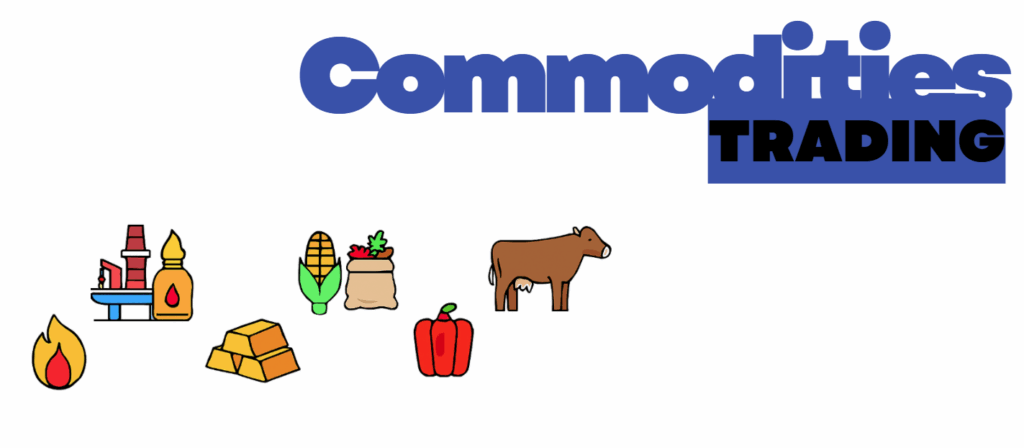
Commodities markets allow participants to trade standardized contracts on raw materials and primary products. These contracts cover energy, metals, agriculture, livestock, and fast-growing environmental products. Below is a concise, accurate, and practical overview of what you can trade, how each category works, and what matters to traders when choosing the right instrument.
What Can Be Traded in a Commodities Market?
You can trade energy, metals, agriculture and softs, livestock, and environmental contracts on major exchanges. Instruments include futures, options on futures, spreads, and in some jurisdictions ETFs, ETNs, and CFDs that track commodity prices. Successful traders focus on the benchmark contract, contract specifications, liquidity, and seasonality.
Tradable Commodity Categories
Tradable commodity categories include energy, metals, agriculture and softs, livestock, and environmental contracts. Each category groups standardized products with clear contract specs (grade, lot size, delivery), deep benchmarks, and distinct drivers such as seasonality, policy, and global supply–demand. Choosing the right category starts with your objective, hedging costs, expressing a macro view, or trading relative value then matching it to the most liquid benchmark and contract month.
Energy
Energy commodities dominate global flows and often set the tone for cross-asset risk. In the commodities market, crude oil, refined products, and natural gas trade around well-known benchmarks with deep liquidity and clear seasonality. Prices react to supply-demand shifts, OPEC+ decisions, refinery maintenance, weather, and geopolitics, making energy a core venue for both hedgers and active traders.
Crude oil: WTI (Cushing) and Brent (seaborne) benchmarks
Metals bridge macro and micro themes: they’re sensitive to growth, inflation, energy costs, and technology cycles. Precious metals serve as stores of value and tail-risk hedges, while base metals mirror industrial activity and electrification trends. Contract specs purity, shape, and delivery point matter for hedgers managing basis.
Precious: Gold, silver, platinum, palladium
Base (non-ferrous): Copper, aluminium, zinc, nickel, lead, tin
Use cases: Inflation hedge, industrial cycle exposure, EV/battery and grid investment themes
Key considerations: Warehouse rules, deliverable grades, prompt-date structure, time spreads
Agriculture and Softs
Agricultural and soft commodities are highly seasonal and weather-driven. Yields, planting decisions, export policies, and logistics can shift pricing quickly. Traders watch crop reports and climate anomalies, while producers and consumers use futures to stabilize input and revenue.
Livestock futures reflect herd cycles, feed costs, and consumer demand. Contracts specify animal category and weight, helping ranchers and processors hedge revenues and costs while offering directional opportunities for speculators.
Contracts: Live cattle, feeder cattle, lean hogs
Drivers: Feed prices (corn/soymeal), disease reports, herd liquidation or expansion
Key considerations: Seasonal demand (barbecue/holiday), cold-storage data, basis vs local cash markets
Environmental Markets
Environmental contracts have matured into a meaningful sleeve of the commodities landscape. Carbon allowances and related products let compliance entities and investors manage exposure to climate policy, energy transition costs, and decarbonization pathways.
Allowances/credits: EUAs, UKAs, and regional programs; select offset futures
Use cases: Compliance hedging, portfolio diversification, policy-driven trades
Key considerations: Program design changes, auction schedules, correlation to power/fuel markets
How These Markets Trade
Commodities markets trade primarily via standardized futures and options on futures on regulated exchanges. Participants also use calendar/inter-commodity spreads and cleared swaps, plus spot/physical forwards, investors may access exposure through ETFs/ETNs/CFDs where permitted. Execution depends on contract specs, margin, liquidity, term structure (contango/backwardation), roll/expiry dates, and managing basis risk.
Futures
Standardized exchange-traded contracts define quantity, quality, delivery location, delivery month, and trading hours. Futures are the foundation for hedging and price discovery.
Options on Futures
Calls and puts on the underlying futures allow defined-risk strategies, theta harvesting, and volatility plays.
Spreads and Swaps
Calendar spreads: Express views on storage and carry by trading nearby vs deferred months.
Inter-commodity spreads: Examples include crack, crush, and spark spreads that link related markets.
Swaps: Often cleared and used by commercial hedgers to match basis exposure.
Spot and Physical Forwards
Used by producers and consumers for actual delivery. Price is typically referenced to an exchange benchmark plus or minus a basis.
Exchange-Traded Products and CFDs
Where permitted, ETFs, ETNs, and CFDs provide exposure without managing futures directly. Always consider tracking error, roll costs, and local regulations.
Content Specifications
Contract specifications that matter include the lot size (how much exposure one contract controls), tick size and tick value (minimum price move and its P&L impact), grade/quality standards (e.g., sulphur content for crude, purity for metals, crop variety for softs), and the delivery point or pricing hub that defines basis risk.
Traders must also check listed months and trading hours, settlement type (physical vs cash), last trade date and first notice date to plan rolls, plus initial/maintenance margin, position limits, currency, exchange and clearing fees, and holiday calendars. Getting these details right aligns your hedge or speculative view with the correct benchmark, improves liquidity and execution, and reduces surprises from term structure (contango/backwardation), storage constraints, and roll yield critical for anyone evaluating what can be traded in a commodities market.
Risks and Best Practices
Trading commodities can be rewarding, but it concentrates several types of risk. Understanding how these risks show up in real contracts and markets helps you choose the right product and execution plan.
Core Risks You Must Manage:
Price volatility Commodities react to weather, geopolitics, inventory data, and macro surprises. Intraday swings can trigger margin calls even when the long-term thesis is intact.
Leverage and margin Futures provide large notional exposure for a small initial margin. Losses can exceed your deposit if markets gap through stops. Monitor initial and maintenance margin daily.
Basis risk Your local cash exposure may not match the exchange benchmark. Location, grade, and timing differences create a spread between your price and the futures price that can widen unexpectedly.
Liquidity and execution Off-months and less popular contracts can have wide bid-ask spreads and slippage. Liquidity can thin around roll dates, holidays, and major data releases.
Best Practices For Safer, Smarter Execution:
Match the contract to the exposure Choose the benchmark that best fits your location, grade, and timing. If you are hedging jet fuel costs, consider crack spreads instead of outright crude.
Size positions by risk, not conviction Define a maximum loss per trade and per day. Convert tick value into currency risk at your stop distance, then size the contract count accordingly.
Use the liquid month and plan the roll Trade the most liquid front or second month. Put roll windows and notice dates on your calendar and automate alerts three to five trading days ahead.
Control leverage with margin buffers Maintain excess cash above maintenance margin, typically 1.5 to 2.0 times requirement, to reduce forced liquidations during volatile sessions.
Conclusion
Commodity trading brings real-economy price moves into a transparent, rules-based marketplace. If you’re evaluating what can be traded in a commodities market, the investable universe spans energy, metals, agriculture, livestock, and environmental contracts, each with clear benchmarks, contract specifications, and liquidity patterns. The edge comes from matching your objective to the right contract month and delivery hub, sizing by tick value and margin, and actively managing basis, term structure, and execution costs from entry through the roll and exit. With a written playbook, disciplined risk controls, and ongoing review of slippage and roll yield, volatile markets become structured opportunities rather than surprises. Ready to put the framework to work? Start with the most liquid benchmark in your category, trade small.
Share Now
Disclaimer:This content is provided for informational purposes only and does not constitute, and should not be construed as, financial, investment, or other professional advice. No statement or opinion contained herein should be considered a recommendation by Ultima Markets or the author regarding any specific investment product, strategy, or transaction. Readers are advised not to rely solely on this material when making investment decisions and should seek independent advice where appropriate.
Thank you for visiting the Ultima Markets website. Please note that this website is intended for individuals residing in jurisdictions where access is permitted by law. Ultima and its affiliated entities do not operate in your home jurisdiction.
By clicking ‘Acknowledge’, you confirm that you are entering this website solely on your own initiative and not as a result of any specific marketing outreach. You wish to obtain information from this website based on reverse solicitation principles, in accordance with the applicable laws of your home jurisdiction.