This website is managed by Ultima Markets’ international entities, and it’s important to emphasise that they are not subject to regulation by the FCA in the UK. Therefore, you must understand that you will not have the FCA’s protection when investing through this website – for example:
You will not be guaranteed Negative Balance Protection
You will not be protected by FCA’s leverage restrictions
You will not have the right to settle disputes via the Financial Ombudsman Service (FOS)
You will not be protected by Financial Services Compensation Scheme (FSCS)
Any monies deposited will not be afforded the protection required under the FCA Client Assets Sourcebook. The level of protection for your funds will be determined by the regulations of the relevant local regulator.
Note: UK clients are kindly invited to visit https://www.ultima-markets.co.uk/. Ultima Markets UK expects to begin onboarding UK clients in accordance with FCA regulatory requirements in 2026.
If you would like to proceed and visit this website, you acknowledge and confirm the following:
1.The website is owned by Ultima Markets’ international entities and not by Ultima Markets UK Ltd, which is regulated by the FCA.
2.Ultima Markets Limited, or any of the Ultima Markets international entities, are neither based in the UK nor licensed by the FCA.
3.You are accessing the website at your own initiative and have not been solicited by Ultima Markets Limited in any way.
4.Investing through this website does not grant you the protections provided by the FCA.
5.Should you choose to invest through this website or with any of the international Ultima Markets entities, you will be subject to the rules and regulations of the relevant international regulatory authorities, not the FCA.
Ultima Markets wants to make it clear that we are duly licensed and authorised to offer the services and financial derivative products listed on our website. Individuals accessing this website and registering a trading account do so entirely of their own volition and without prior solicitation.
By confirming your decision to proceed with entering the website, you hereby affirm that this decision was solely initiated by you, and no solicitation has been made by any Ultima Markets entity.
Ultima Markets does not have an establishment in Singapore and does not operate from Singapore.
Ultima Markets does not provide products or services to citizens or residents of Singapore, and account applications from Singapore citizens or residents will not be accepted.
If you are a citizen or resident of Singapore, please do not open an account or use Ultima Markets’ products or services.
By selecting “Acknowledge and Continue Browsing”, you confirm that you are accessing this website on your own initiative and that your access is not the result of any direct marketing, targeted advertising, solicitation, or promotional activity by Ultima Markets.
Nothing on this website constitutes an offer, solicitation, or promotion of products or services in any jurisdiction where such activity is prohibited. You are responsible for ensuring that your access to and use of this website complies with applicable local laws and regulations.
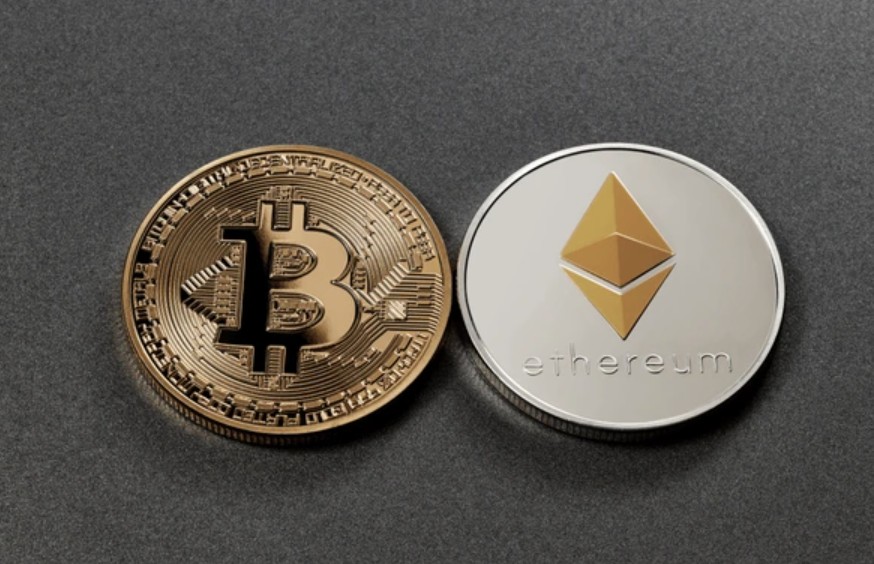
Compare Ethereum vs Bitcoin, explore key differences, price drivers, and trader insights with Ultima Markets to make smarter crypto decisions.
Ethereum vs Bitcoin: Which is Better?
Bitcoin is better suited as a store of value, often called “digital gold,” with a fixed supply of 21 million coins. Ethereum is better for innovation, powering smart contracts, decentralized apps, and staking rewards. Traders often combine both, Bitcoin for stability, Ethereum for growth and utility.
So, it depends on your goals:
Choose Bitcoin if you want scarcity, security, and a hedge against inflation.
Choose Ethereum if you value innovation, utility, and staking rewards.
Many traders see value in holding both, using Bitcoin for stability and Ethereum for growth potential.
What is Bitcoin
Bitcoin is often described as digital gold. It’s the first cryptocurrency, designed as a peer-to-peer payment network with a fixed cap of 21 million coins. Its scarcity and long history make it a store of value in the eyes of many investors.
What is Ethereum
Ethereum is more than just a cryptocurrency. It’s a programmable blockchain that powers decentralized applications, smart contracts, NFTs, and DeFi protocols. Its coin, Ether (ETH), fuels the network and is also used for staking. Since its 2022 transition to Proof-of-Stake (known as “the Merge”), Ethereum has become significantly more energy-efficient.
Key Differences Between Bitcoin and Ethereum
Although both Bitcoin and Ethereum run on blockchain technology, they were built with very different purposes in mind. These differences shape how investors and traders use them today.
Purpose and Design
Bitcoin was created in 2009 by Satoshi Nakamoto to act as a peer-to-peer digital currency. Over time, it evolved into a store of value, often compared to gold. Its design is simple and focused, transfer of value and long-term scarcity.
Ethereum, launched in 2015 by Vitalik Buterin and others, was built as a programmable platform. Instead of just moving money, Ethereum allows developers to build applications, run smart contracts, and create entire financial systems (DeFi) without banks.
Supply and Scarcity
Bitcoin has a fixed maximum supply of 21 million coins. This hard cap fuels its scarcity appeal and gives it inflation-resistant qualities.
Ethereum has no maximum supply. However, since the 2021 London upgrade (EIP-1559), a portion of ETH is “burned” with every transaction. Combined with Proof-of-Stake rewards, Ethereum’s supply can sometimes even become deflationary, depending on network activity.
Consensus Mechanism
Bitcoin runs on Proof-of-Work (PoW). Miners compete to solve complex puzzles, which secures the network but requires high energy consumption.
Ethereum switched to Proof-of-Stake (PoS) in September 2022 through “the Merge.” Validators now secure the network by staking ETH, reducing energy usage by over 99% and making the system more sustainable.
Transaction Speed and Costs
Bitcoin transactions confirm roughly every 10 minutes. Its network is highly secure but not designed for speed or scalability.
Ethereum processes blocks in less than a minute. It supports thousands of decentralized apps, but high demand often leads to network congestion and expensive “gas fees.” Upcoming upgrades like Pectra (expected late 2025/early 2026) aim to make transactions cheaper and faster.
Use Cases
Bitcoin: Primarily used as a store of value, inflation hedge, and payment method in some regions.
Ethereum: Powers decentralized finance (DeFi), non-fungible tokens (NFTs), decentralized autonomous organizations (DAOs), and Web3 applications. ETH is both a currency and “fuel” for running applications.
Market Perception
Bitcoin is seen as the conservative, stable choice, the “gold” of crypto. Institutions and long-term investors favour it for wealth preservation.
Ethereum is viewed as the innovative, versatile option, the “tech stock” of crypto. Traders and developers see it as a growth play tied to blockchain adoption.
Factors That Influence Prices of Bitcoin and Ethereum
The value of both Bitcoin and Ethereum is shaped by a mix of macro trends, network fundamentals, and market sentiment. While they share some common drivers, each also reacts to unique catalysts.
Bitcoin’s Price Drivers
Scarcity and Halvings: Bitcoin has a fixed supply of 21 million. Every four years, the “halving” cuts block rewards in half, reducing new supply. Historically, these events trigger bullish cycles because demand stays strong while supply growth slows.
Institutional Adoption: Large companies and funds holding Bitcoin, from Tesla to MicroStrategy — reinforce its reputation as a store of value. The approval of Bitcoin spot ETFs in the U.S. and other markets has brought additional institutional inflows.
Macro and Geopolitics: Bitcoin often rises during inflationary periods or when fiat currencies weaken. Political instability or banking crises also push some investors toward Bitcoin as a hedge.
Regulation: Clearer crypto regulations can increase confidence and participation, while strict bans or restrictions often create sell pressure.
Ethereum’s Price Drivers
Network Utility: Ethereum is the backbone of decentralized finance (DeFi), NFTs, and many Web3 applications. When demand for these services rises, so does demand for ETH to pay transaction fees.
Staking Yields: Since the shift to Proof-of-Stake, traders can earn yield by staking ETH. Higher staking participation reduces circulating supply, which can support price growth.
Ecosystem Upgrades: Major upgrades (like “the Merge” in 2022 and the upcoming Pectra upgrade) directly impact network efficiency and investor sentiment. These technical improvements often drive speculative rallies.
Competition and Innovation: Ethereum faces competition from other smart contract platforms like Solana, Cardano, and Avalanche. Still, its first-mover advantage and developer community help maintain demand.
Shared Influences
Dollar Strength: A strong U.S. dollar can pressure both assets since crypto is typically priced in USD.
Market Liquidity: Crypto markets are still relatively thin compared to traditional finance, meaning large inflows or outflows can swing prices sharply.
Investor Psychology: Retail FOMO, institutional hedging, and even social media buzz play a major role in short-term volatility
Bitcoin’s Leadership Role
Research and academic studies shows that Bitcoin often acts as a market leader. Its movements explain up to 75% of Ethereum’s daily price changes during periods of high correlation. This means Bitcoin rallies or crashes frequently set the tone for the wider crypto market, including ETH.
Historical Price Trends
Bitcoin: launched in 2009 at nearly zero, hitting $1,000 by 2013, $19,000 in 2017, and soaring above $100,000 in 2024. In mid-August 2025, it touched a record high of around $124,500.
Ethereum: reached its all-time high of $4,800 in 2021. While it hasn’t yet broken above that level, it is closing in on the record, with a 41% surge in August 2025.
How Traders View Bitcoin and Ethereum
Bitcoin is the safe-haven play: digital gold, scarce, widely adopted, and attractive to institutions.
Ethereum is the growth and innovation play: powering DeFi, NFTs, staking, and a broad ecosystem of decentralized applications.
Recently, Ethereum has outperformed Bitcoin on shorter-term rallies, reflecting excitement over upgrades and stronger utility. In August 2025, Ethereum surged 41% in one month, outpacing Bitcoin’s gains despite BTC reaching a new all-time high. Analysts call this the “catch-up trade,” where Ethereum narrows the gap in relative performance after Bitcoin leads a rally.
Conclusion
The debate over Ethereum vs Bitcoin: Which is Better has no one-size-fits-all answer. Bitcoin remains the anchor of the crypto market, valued for its scarcity, stability, and role as digital gold. Ethereum, meanwhile, continues to attract traders and developers with its utility, staking opportunities, and constant innovation.
For traders, the smart approach is often diversification, using Bitcoin as a long-term store of value while positioning Ethereum for growth potential in decentralized finance and Web3. Trade smarter with Ultima Markets today.
Share Now
Disclaimer:This content is provided for informational purposes only and does not constitute, and should not be construed as, financial, investment, or other professional advice. No statement or opinion contained herein should be considered a recommendation by Ultima Markets or the author regarding any specific investment product, strategy, or transaction. Readers are advised not to rely solely on this material when making investment decisions and should seek independent advice where appropriate.
Thank you for visiting the Ultima Markets website. Please note that this website is intended for individuals residing in jurisdictions where access is permitted by law. Ultima and its affiliated entities do not operate in your home jurisdiction.
By clicking ‘Acknowledge’, you confirm that you are entering this website solely on your own initiative and not as a result of any specific marketing outreach. You wish to obtain information from this website based on reverse solicitation principles, in accordance with the applicable laws of your home jurisdiction.